

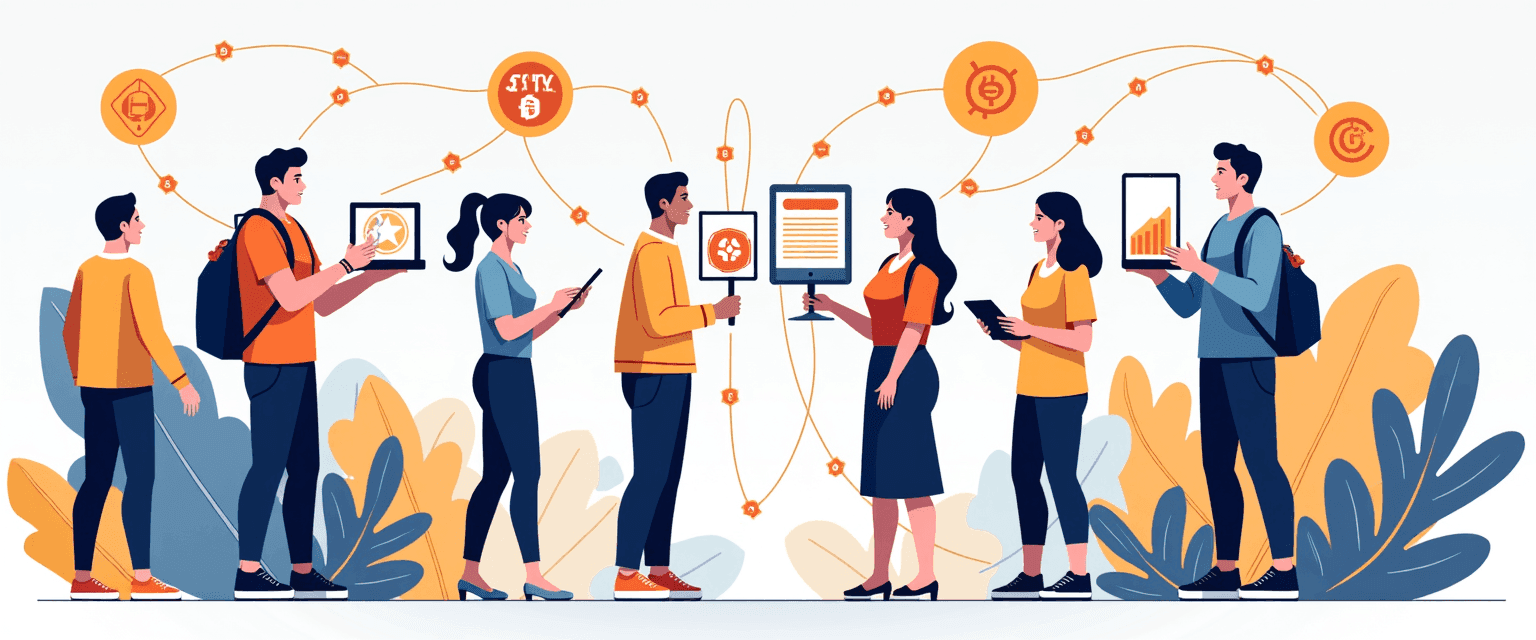
When Fame Meets Blockchain
A seismic shift is shaking up the digital world, and in its heart lies the incendiary collision between celebrity culture and non-fungible tokens (NFTs). What started as a niche fascination among laptop-based crypto enthusiasts has exploded into the mainstream, with mega-platforms from A-list stars across Hollywood to Bollywood driving adoption. This is not simply a matter of big names dipping their toes in a trend; it’s an existential reshaping of the nature of celebrity influence for the Web3 era, engendering new models for fan engagement (not to mention digital ownership), artist revenue and more.
While celebrities are getting in on the game with moves like Snoop Dogg creating a metaverse mansion and Amitabh Bachchan auctioning his father’s poetic legacy on the blockchain, they’re not just promoting NFTs, they are building things in this new digital economy. This deep dive takes an inside look at how celebrity participation is shaping the NFT landscape: The strategies, sky-high sale prices, risks and a powerful symbiotic relationship that's rapidly re-centering digital collectibles, music NFTs and the nascent metaverse..
The Celebrity NFT Catalyst: From Endorsement to Ownership
The first wave of celebrity NFT activity has mirrored a familiar cycle: endorsement. Stars would align themselves with ongoing projects, using their public profiles to hype them. The landscape has quickly evolved, though, to become a model for deep, participatory ownership and creation. Hollywood stars are now NFT founders, curators and collectors.
The seed of this can be tentatively placed at the Bored Ape Yacht Club (BAYC). This group of 10,000 algorithmically generated ape avatars rose above its origins to become the premier digital status symbol. When celebrities ranging from Justin Bieber and Stephen Curry to Jimmy Fallon and Madonna bought Bored Apes and made them their public profile pictures across social media, they did more than just invest — they validated the very idea of NFTs as social capital. At an estimated 500 ETH (at the time, more than $1.3 million), Bieber’s purchase demonstrated that NFTs were not some flash-in-the-pan phenomenon but a new frontier of cultural and financial investment. This sound move from passive support to active ownership reflects the faith in the intrinsic value of place and blockchain technology respectively, that are shaping the evolution of Hybrix”.
The Psychology of Celebrity-Driven Demand
Why does it make the price of an NFT explode when a celebrity tweets something about it or posts an Instagram story? At its core are potent, linked concepts:
-
Social proof: We are all social beings and our decision-making is greatly influenced by other people especially high status ones when it comes to uncertain environments. The dense, somewhat overwhelming universe of crypto art and blockchain technology is more easily decoded when a vetted A-lister champions it. Their involvement serves as a seal of approval and lowers perceived risk for fans, neutrals.
-
Aspirational Connection: Owning an NFT that a celebrity (or better yet, the same celebrity) has means you own something they do. It’s definitely not unique physically — but digitally, there can only be one true owner (in theory). E.P.L.C., in that sense, is a digital piece of fandom, granting its customers membership in an exclusive club. This transitions the traditional fan dynamic from passive consumption to active, demonstrable engagement.
-
Scarcity and Exclusivity: NFTs are scarce by nature, and celebrity drops tend to be particularly scarce. This manufactured scarcity, when combined with an eager audience of millions of fans, is the perfect recipe for high-price auctions and near-instant sell-outs. That is — the item is not only rare; it’s provably and permanently rare, with ownership immutably recorded.
A Global Phenomenon: Celebrity NFTs Across Industries
The celebrity NFT wave is nothing short of a global tsunami, and it reaches all the way to every nook and cranny of the entertainment and sports world.
The Sonic Revolutionary Leaders of the Music Insurgency
Musicians have been among the most organic and creative adopters of NFTs, finding ways to monetize their art, and also create ties with fans. • Grimes: The musician and visual artist created a stir in early 2021 when she sold a group of digital artworks under the title “WarNymph” for nearly $6 million in just 20 minutes. This historic sale demonstrated that there was huge demand for NFTs of digital art by established artists. • Snoop Dogg: The ultimate Web3 early adopter, Snoop has gone all in. In addition to releasing music and collectibles as NFTs, he is constructing “Snoopverse,” a virtual world within The Sandbox metaverse where fans can own plots of digital land near his own estate. He is also a prominent collector who is rumored to be the influential NFT • 3LAU: Electronic artist Justin Blau (better known as 3LAU) shattered records with the sale of an NFT album for a staggering $11.6 million, providing evidence of a new model for streaming independent music that returns royalty payments to artists and creators beyond their initial sales. • Indian Icons: Music composer A.R. Rahman launched his “ARRT” collection to raise funds for music education, and ritviz and Nucleya have released exclusive tracks & experiences custome-made for their Indian fans, suggesting a localization of the NFT in music.
Sports Superstars Dunking on Digital Collectibles
NFTs and the world of sports are a perfect match, they can be used to capture an iconic, non-replicable moment.
• NBA Top Shot: Basketball highlights became tradable digital collectibles. Participation from superstars such as LeBron James and Zion Williamson not only brought attention to the platform, but connected their own legacy to these digital moments.
• Tom Brady: The NFL great co-founded Autograph, an NFT platform that teams up the biggest names of sports with entertainment and culture to produce official digital collectibles, thereby adding legitimacy to the space.

Bollywood's Blockchain Bonanza
In 2021-2022, Indian cinema’s A-list stormed into the NFT space, attracting a whole new audience : • Amitabh Bachchan: The megastar’s collection was extremely personal, among it were NFTs of his father’s famous poem “Madhushala”, autographed vintage posters from his films and even his first ever avatar in the metaverse. The auction generated intense interest and bidding, drawing his horde of fans into the world of Web3. • Salman Khan: His own “Being Human NFT” collection to raise funds for charity, he showcased how celebrities could use this modern technology for the greater good. • Others on the Frame: Actors such as Rajinikanth (for ‘Phantom’ collectibles), Sunny Leone and Emraan Hashmi, too, have come out with collections — be it digital art or exclusive fan experiences like video messages and virtual meet-and-greets.
AFTER THE SALE: STRATEGIES AND NEW HORIZONS
Savvy stars are moving past one-of-a-kind auctions to create sustainable ecosystems and exploit the immersive potential of the metaverse.
1. The Utility and Community Shift:
The most popular celebrity NFT projects are now offering “utility”. Real-world or digital benefits that extend beyond the image file. This include: • Access to members-only online groups (Discord channels, Telegram groups etc.). • Passes to virtual experiences (concerts, premieres). • Physical drops (hoodies, prints) sent to holders. • Voting rights of creative or philanthropic decisions.
2. Constructing in the Metaverse
The metaverse is the next frontier. They are not only selling art; they are purchasing virtual land and constructing experiences. And Snoop Dogg’s Snoopverse, Paris Hilton’s “Paris World” in Roblox, and concerts by Ariana Grande and Travis Scott held inside Fortnite complicate the lines between fandom and shared virtual presence. And these always-on digital venues offer a vision of the future, when fan engagement is not episodic but ongoing and interactive.
3. Empowering Fan Economies:
With NFTs, the financial relationship of creators and fans becomes closer and fairer. Using smart contracts, they can even code the purchase of their NFT to include ongoing royalties (e.g., 10%,) so even if every fan who bought it sells it on a secondary market, one-tenth of each resale will still go back to the creator in perpetuity. This sets up a perpetual stream of income and allows the star's fortunes to be interdependent with those of community.
Navigating the Risks: Volatility, Scams, and Sustainability
It’s a boom that, like so many others in internet culture, is not without tremendous risks and criticism for both the stars creating them and the fans spending money on them. • Volatility of the Market: The niche cryptocurrency market is extremely unstable. NFTs linked to these holdings can experience wild value swings. There is also the possibility of a project being promoted by a celebrity and then losing steam in value, which can lead to backlash and have reputational repercussions for the famous person as well as affect their fans’ finances. • Environmental Issues: Because some blockchain networks require a lot of energy to operate (such as Ethereum’s old proof-of-work system), people have criticized NFTs. Eco-conscious celebs are also increasingly turning to eco-friendly blockchains like Polygon, Solana, or Flow for their drops. • Scams and “Rug Pulls”: There be dragons The space is also ripe for bad IRL actors. Celebrities need to do hyper-vigilant research before putting their name on something. Fans, in turn, must be vigilant against fake celebrity accounts, scams for minting coins and projects that profit from raising money and then stop developing (“rug pulls”). • Fears of a Speculative Bubble: A common criticism is that the NFT market today has more to do with hype and speculation than any fundamental value. Celebrities hopping on the trend can make this perception worse. Building sustainable utility, not just speculative trading, is what will help ensure the space’s long-term health..
The Future: A New Blueprint for Fandom
The way celebrities are driving the popularity of NFTs is not just a marketing gimmick; it’s a north star for the future of digital culture. And as we move closer to a more decentralized web (Web3), our understanding of the intermediary role between creators, their work, and their audience will completely change.
What we are seeing is a move to much more: • Fans morph into stakeholders – a verifiable, financial stakeholder in the success of an artist’s digital output. • Unique VIP experiences — concert metaverse access, co-creation opportunities –are tokenized and available. • Celebrity brands get decentralized, propped up by a community of users who own their NFTs.
The next wave of celebrity NFT projects are likely to veer away from static digital art and toward more dynamic, living assets that offer access to narrative reinventions in progress, games and virtual worlds. You could imagine, let’s think through an NFT that starts off as a ticket to a concert, then it turns into a backstage pass for other events and then has the opportunity to evolve into something like a character skin in a celebrity-branded game living within metaverse.
Conclusion: A Symbiotic Revolution
The relationship between stars and NFT technology is a powerfull, symbiotic revolution. Celebrities provide the visibility, credibility and creative power needed to bring millions into the Web3 world. In exchange, NFTs provide them with entirely new ways to express themselves creatively. This development is especially relevant for a platform like Storygame, which sits at the convergence of storytelling and community on one hand, and blockchain technology on the other. It’s a reminder of what can be achieved in creating immersive worlds where digital ownership means something, communities have agency and stories matter, too. The winners among celebrities in this space will be those who realize that it is not about a quick cash grab but rather creating a long-term legacy on the blockchain. Now, they are not only followers but bridge builders to the platforms on which entertainment, art and fandom will sprout in the future. The lights are on, and the blockchain is watching every move
