

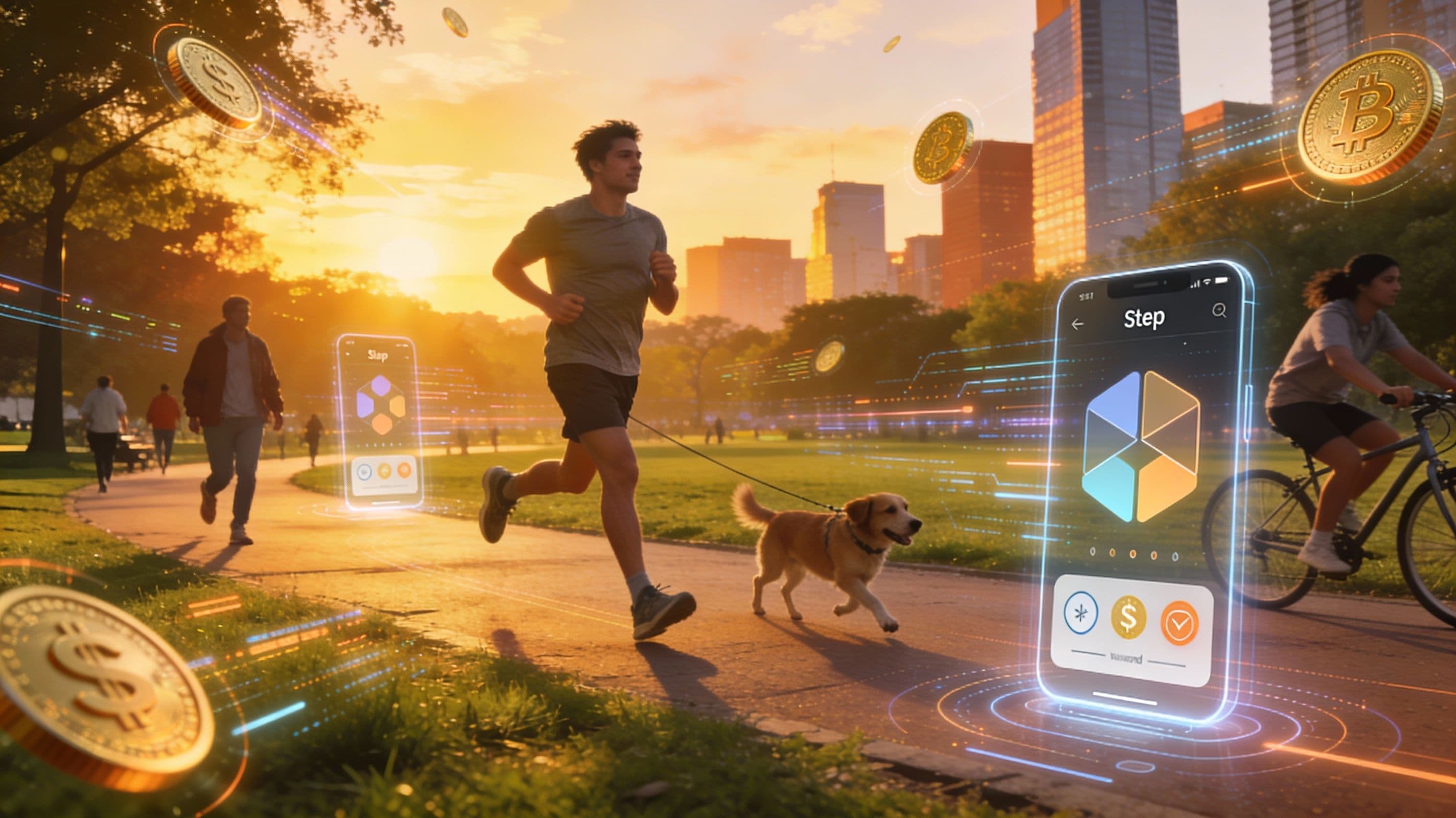
The world of digital entertainment will undergo numerous changes. People will need to create, share, and possess items in virtual worlds in a different way as a result of this shift. Traditional video game revenue streams are undergoing significant change. This is due to publishers' and developers' extreme caution when using a closed-loop system. Move2Earn (M2E) is a novel method of earning money that creates new economies where each step, move, and calorie burned has actual digital value by utilizing game design, blockchain technology, and physical activity.
This is a significant shift that will alter the gaming industry as a whole, not just a small one. Players have been stealing from the economies of the games for a long time. In exchange for spending time, money, and effort on games, players receive virtual goods and experiences that are exclusive to databases managed by businesses. They don't often get back the value they create through things like social networks, community content, and gameplay data in a way that they can own and use. Move2Earn is different because it introduces a simple but powerful idea: player activity, especially physical movement, is a valuable good that can be measured, verified, and rewarded in a clear digital economy.
Health and wellness, behavioral economics, crypto currency, and social gaming are just a few of the many fields that are impacted. The mechanics of Move2Earn, its current difficulties, and its potential to revolutionize the industry will all be thoroughly examined in this 4000-word study. It will look at how it could make the economy of games more fair, create value loops that last, and create a new contract between creators and players in digital worlds.
Part 1: The Problems and Limitations of the Structure of Modern Game Economics
To fully understand how Move2Earn could change things, we need to first look at the problems that have been in the game economy for a long time and how things are now.
The Concentration of Economic Power
In traditional video game economies, the government is nice sometimes and not so nice other times. Like a central bank, the developer has all the power:
-
Currency Issuance: They decide how much money is made in the game, how it is given out (through quests, rewards, and purchases), and how it is used (for repairs, fast travel, and taxes).
-
Asset Scarcity: They choose how hard it is to find digital items, like that rare skin or legendary sword. People are more interested and make more money when there aren't as many things, but players have to rely on drop rates and loot boxes.
-
Value Definition: The developer gets to choose what is valuable. The developer decides how much an item is worth based on its stats, how it looks, or where it fits in the game. These rules can be changed by a patch.
This centralization is naturally stressful. Players are part of the economy, but they don't get to make decisions about how it works. Changes to the balance, new expansions, or server shutdowns can make the time and money they spent on the game worth less right away.
The Free-to-Play (F2P) Problem and Design That Takes Things Away
The free-to-play model has made it easier for people to get in, but it has also made the psychology of making money more complicated and often dangerous. Designing a game is often more about getting players to spend more money than it is about making the game more fun for them. You can see this in:
Pay-to-win mechanics make a "haves" and "have-nots" system, where having more money gives you a clear advantage in competition.
-
Grind Inflation: on purpose making players go slower so they will buy currency packs or time-savers.
-
Loot Box Controversy: systems that are hard to understand, like gambling, and turn luck into a product while using psychological triggers.
In these models, the game economy isn't a real place to live; it's a well-oiled machine that makes money by getting people to play. The "fun" and the "economy" don't always agree with each other.
The Play-to-Earn (P2E) Experiment and Its Problems
Play-to-Earn (P2E), a revolutionary but flawed predecessor to Move2Earn, came about with the rise of Web3 gaming. Axie Infinity and other games like it were the first to show that people could make money by playing. But it also had some major issues:
Many P2E models were set up like pyramid schemes, which caused hyperinflation and tokenomics that couldn't last. People who joined early got tokens by playing, but the tokens were only worth something if new players kept buying in. When growth stopped, token prices fell and economies disappeared.
-
The Workification of Play: When the main reason for playing changes from having fun to making money, the game becomes work. People got bored with doing the same things over and over again and making money, which was often more important than the "game" in "gamefi."
-
High Barriers to Entry: Many P2E games required a lot of money up front to be fun (like buying expensive NFT starter characters), which kept a lot of people from playing and made the game's economy even more unfair.
P2E showed that people want economies run by players, but it also showed that there needs to be a way to add value that is more stable, easier to use, and rewarding on its own.
The Issue of Separating Digital Value
The most important limit might be isolation. World of Warcraft, Fortnite, and FIFA Ultimate Team all have very strong and safe economies. The coins, V-Bucks, or gold you get don't mean anything unless you're on the platform where you got them. The hundreds of dollars spent on a rare skin are not a digital asset that can be moved around; they are value locked in a corporate account. The gaming community has had problems with this lack of interoperability and real ownership for a long time.
The solution to each of these issues is Move2Earn. It proposes a new foundation for digital economies based on a human activity—movement—that anyone can engage in, verify, and find beneficial.
An explanation of Move2Earn's operation and key components
Move2Earn is a system composed of numerous interconnected design and technological pillars rather than a single concept. You must be aware of these components in order to comprehend its economic potential.
The Layer of Physical Input: Movement as Evidence-Based Work
Move2Earn is a new gaming system that either replaces or enhances the previous "proof-of-work" system, which is dependent on the amount of time you spend grinding. This input layer requires:
-
Movement verification: Verifying physical activity safely using wearable technology (such as Fitbits, Garmins, and Apple Watches), smartphone sensors (such as GPS and accelerometers), or specialized Internet of Things devices. You can display your data by counting steps, displaying your distance traveled, displaying your heart rate zones, and displaying the kinds of exercises you've completed. One of the hardest technical problems is stopping people from cheating the system, like by shaking their phones while they run on treadmills. Some possible fixes are to use "trust scores" based on community verification, combine data streams from different sensors, or use special hardware that measures biometrics more accurately.
-
Privacy and Data Ownership: Users' movement data can be managed with Web3 integrated Move2Earn protocols. This is not one of those typical fitness apps that sells and collects user data. Players have the option to demonstrate proof of their activity to receive rewards, without exposing raw health or location data to a central entity.
The Economy Motor: What are tokenomics and how to still get rewards?
This is where you convert information about movement into money. The rules that govern the economy of a cryptocurrency or token - known as tokenomics - need to be carefully considered if the token is going to last.
One includes a dual-token model, which is the use of two tokens - spawned from successful models many use:
-
Governance Token: A scarce and valuable token that allows you to vote on the future of the protocol, and indicates how much equity the ecosystem will possess in perpetuity. They come to people in the form of doing big things or buying them, on the open market.
-
Reward/Utility Token: A currency that you earn and grows in value as you travel. You can spend it to purchase items in apps, create NFTs, pay fees or enhance your assets. Emission rates and “token sinks” (mechanisms for removing tokens from circulation) must be perfectly calibrated to ensure the value of tokens does not change.
-
Dynamic Reward Algorithms: Those nice “X tokens per step” models are easy to use and they can change the market. Advanced systems employ dynamic algorithms for changing the rewards based on:.
-
Network Health: If too many tokens are being created, emissions decrease.
-
Token Price: Adjust the earnings rate to maintain in the real world value of target for efforts.
-
User Behavior: To reward good habits, increase point values for doing the same thing many times or doing numerous different things.
The asset layer: NFTs as productive capital
The things people buy and sell in the Move2Earn economy are called Non-Fungible Tokens (NFTs). They are not just collectibles, but rather practical items to help you make more money:
The best-known instance is Virtual Sneakers and Runners. Some things about an NFT sneaker, like Efficiency (how many tokens per energy spent), Resilience (how long it lasts and how much it costs to fix) or Rarity, can affect how much money you can make. More useful things to own are nicer sneakers.
-
Devices and Consumables - NFT wearables, energy drinks or repair kits that temporarily increase stats or repair damaged assets.
-
Land and Social Hubs: NFT land plots can be social spaces, or places that make money by what other players do in more complicated metaverse integrations.
These N.F.T.s create a market that is incredibly deep and player-run. People can rent out their things, sell them on other markets or enhance them in a way that makes the ecosystem more strategic and businesslike.
The Gameplay Layer: The "Fun" Part of "Move-to-Earn"
This is the most important thing for success in the long run. If Move2Earn doesn't have fun game design, it just becomes a soulless app that tracks steps and gives you a token. The gameplay layer uses information about how people move to make things fun:
-
Location-Based AR Games: These games use a city as a game board where you can unlock stories, battle virtual monsters, or gather resources by running certain routes.
-
Social-Fi and Team Dynamics: Adding social-fi features that let players join groups or guilds. Group goals for movement open up group rewards. This gives people a sense of belonging and makes them responsible.
-
Putting movement into a story: adding it to a story. When you run every day, you move a character around a fantasy map. At certain points, new chapters of an interactive story game open up.
There’s competitive stuff like races, step-based leaderboard tournaments and PvP battles in which actual real-world stamina and routine can earn players an edge.
The Transformation Effect: Move2Earn Changes Everything
Assembling these parts have implications in the real world and digital worlds.
Fairness and unfair financial aspect of games
Move2Earn is power that lends more equality. There’s no cover charge; all you need is a smartphone and the power of locomotion. This has a lot of effects:
-
Global Access: It allows people to make money in areas where traditional employment is scarce but people use their cell phones. Move2Earn could become a massive economy in the “Global South.”
-
Effort-Based Meritocracy: Genetics and circumstances can affect how good someone is at sports, but most people can choose how hard they work. The economy rewards people who work hard and have good habits, not just people who are good at games or have a lot of money.
-
Wealth Distribution: The more people who create value, the more economic benefits are shared. Even though people who own rare NFTs will still have some advantages, everyone can still do the basic act of moving, which will make the basic reward currency flow more fairly.
Making Long-Lasting Economic Loops with Real-World Anchors
Move2Earn thinks this is the best way to fix the problem with P2E's long-term viability. There is a real-world input that backs up the "inflation" of the reward token: people using energy in a way that can be verified. Time, biology, and motivation limit this energy. It won't last forever. So, the maximum number of tokens that can be minted is limited by the total physical capacity of all the users.
This makes the base more stable. It's not just a guess that the ecosystem is valuable; it helps people stay healthy, builds community, and gives people something to do. Then, the following things can make people want tokens:
-
You can use tokens to make or buy better NFTs, get content, or go to events.
-
Speculation is trading based on how quickly and well the ecosystem is growing.
-
External Value: Brands pay tokens to reach health-conscious users through partnerships for marketing or corporate wellness programs.
The economy is like a circle: people move around and earn tokens, which they can then use to buy things that make moving around more fun or rewarding. This money goes to development and reward pools, which make people want to move more.
The Health and Wellness Revolution: Making Exercise Fun for Everyone
The effects on public health are very big. Move2Earn is the best way to make working out fun because you can earn money and social capital, not just virtual points.
-
Behavioral Change: Fitness apps can close the "intention-action gap" they often have by giving users small rewards for doing things every day. It's easier to choose between taking the stairs or going for a walk at night when you know you'll get a real reward.
-
Gaming communities that include physical activity, exploring the outdoors (in location-based models), and making friends can help with anxiety, depression, and feeling alone.
Companies and health insurers that are ahead of the game will eventually work together or make Move2Earn platforms. They can give employees or members premium subsidies or direct token rewards for their work. This makes health care cheaper and boosts productivity. It's good for all.
Blurring the Lines: The Real World and the Digital World Meet
Move2Earn is part of a bigger trend: the lines between our real and digital economic lives are starting to blur.
-
The "Physigital" Consumer: People will have things in their portfolios that are both real and digital. Their net worth might include their car, savings, NFT sneaker collection, and Move2Earn protocol governance tokens.
-
Location-Based Commerce: If you go to certain real-world places, like partner gyms, stores, or parks, you might get special airdrops, discounts, or events in the game. This would make location-based marketing a very helpful new tool.
Movement data becomes a medium, giving you new ways to be creative. A "proof-of-effort" could be an abstract NFT art piece that shows what an athlete does every day when they run. Choreography could be turned into digital assets that dancers could trade.
Problems, Criticisms, and the Next Steps
Every time a new piece of technology changes the world, it causes big problems. There are a lot of problems that Move2Earn needs to fix before it can reach its full potential.
The Problem of Sustainability: After the First Generation
Move2Earn economies are more stable than pure P2E economies, but they can still fail. Some of the most important problems are:
-
Designing for Long-Term Token Value: Staying away from the "emission cliff," which is when early adopters sell their tokens and the value of the token goes down. This means you have to always think of new ways to use the tokens, burn them in ways that work, and run the treasury in a way that would make a central bank proud.
-
The "Speculation vs. Utility" Balance: When it's too easy to make money, it attracts mercenary capital that makes the community less stable. If it doesn't make enough money, it won't work. Finding the right balance is important so that rewards feel important but don't change people's lives.
-
Too Much Movement: As verification technology gets better, could "movement farms" become a thing? These would be big warehouses full of simple machines that make things look like they're moving. The best way to protect yourself is with strong biometric verification.
Not sure about the law and rules
People notice when you work at the crossroads of health, gaming, and money.
When does a reward token stop being a utility token and become a security? Regulatory bodies like the SEC are still trying to figure this out, so it's hard for projects to know what to do.
-
Tax Questions: Do you have to pay taxes on the tokens you get? The answer is "yes" more and more often in most places. Users and platforms will need clear tools and steps to follow when they file their taxes.
-
Health and Liability: What happens if someone gets hurt while trying to reach a movement goal for prizes? Who's at fault? It's important to have clear rules for how to use the service and to encourage safe behavior.
Making sure that everyone is included and that new kinds of unfairness don't happen
The model must be purposefully crafted to be inclusive:
-
Accessibility for Users with Different Abilities: How does the Move2Earn protocol work for people who use wheelchairs or have other conditions that make it hard for them to get around? New models could look at different types of movement or work to make sure the economy isn't just for people who can move.
-
Geographic and Economic Bias: People who live in cities that are safe and easy to walk around in are more likely to like GPS-based games than people who live in rural or dangerous areas. The weather can also be a problem. People should be able to take part in projects in more than one way.
The Importance of Fun: Staying Away from the "Grind" Mindset
Making a game is the hardest thing to do. The Move2Earn project that lasts the longest will be the one where users forget they're "earning" and get lost in the "playing." The movement should feel like a natural part of an adventure, competition, or social experience, not a chore you have to do every day to pay the virtual rent on your NFT sneaker.
The Future Vision: Move2Earn as Basic Infrastructure
We can see Move2Earn growing from a niche app to a basic part of the open metaverse in the future.
Your Move2Earn profile, which has your verified activity history, achievement NFTs, and fitness level, could become a portable identity. You could use it to get discounts at a sports store, find teammates in other games who are a good fit for you, or get early access to minting health-related projects.
The "Energy" Layer of the Metaverse: Move2Eran could be the "proof-of-vitality" for the metaverse, just like Bitcoin made "proof-of-work" to keep a ledger safe. Some digital art or experiences might only happen when people are physically active.
Combining with education and social good: Think of "Learn2Earn" modules where students get tokens for going to class or doing educational activities like going to museums (verified by GPS). Or "Green2Earn" programs that pay people to clean up parks in their area. There is a lot of room for good things to happen outside of the model.
Conclusion: Getting used to a new economic reality
The Move2Earn revolution isn't just a passing trend; it's a whole new way to think about what things are worth in the digital age. It says that our attention and physical effort, which are the two most personal resources we have, are valid forms of capital that should be recognized and rewarded in the economies we help build and populate.
Move2Earn links virtual worlds to the fact that people move around, which makes them more sustainable, fair, and focused on people. It makes working out alone into a fun, social, and money-making activity with lots of stories. Instead of amusement parks, it makes players owners and game worlds into lively, player-owned digital city-states.
Along the way, there will be a lot of problems with rules, money, and technology. Projects that can strike the right balance between good tokenomics, great game design, strong verification, and a strong focus on the community will do well. We want to be at the front of this change at Storygame. We want to make experiences where every step tells a story and every story is important. We're not just making games; we're also testing out the economies of the future, one step at a time.
