

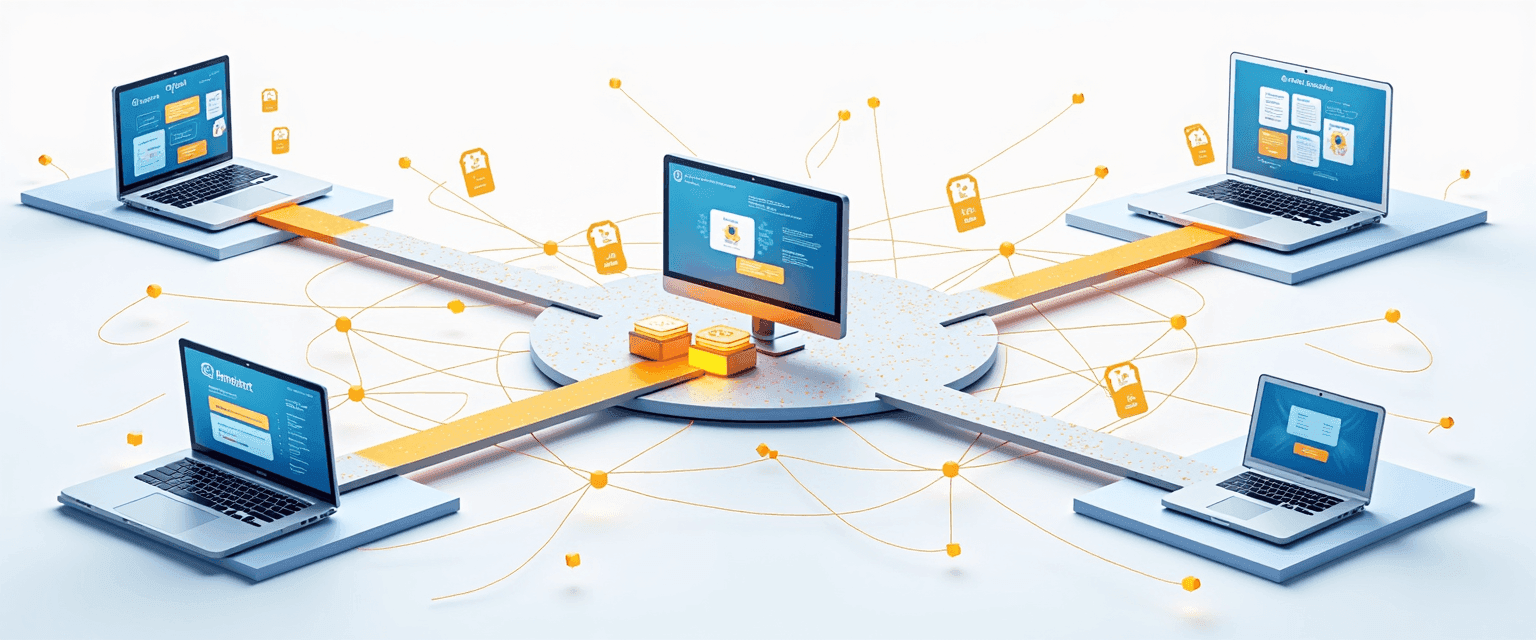
The Critical Role of Interoperability in the NFT Space
The battle for dominance in the booming universe of digital collectibles and non-fungible tokens (NFTs) hinges on a critical technological concept that will decide which platforms flourish and which wither into desolate digital ghost towns: interoperability. Whether you’re buying NFTs, selling NFTs or building NFT marketplaces, if you don’t understand interoperability already you’re not only behind the curve - it’s a whole environment and ecosystem that makes true digital ownership and fluid market dynamics possible.
Interoperability, means that various computer systems or software can all exchange information and use it. Within the area of blockchain tech and NFT platforms, this results in building bridges that connect digital assets across different marketplaces, wallets and gaming ecosystems without losing their character or value. With the NFT market growing from simple profile picture collections to digital art, virtual real estate, game items and tokenization of the physical world, there is an increased demand for interoperability.
This ultimate guide breaks down why NFT interoperability is crucial for the burgeoning future of digital ownership, takes a look at the tech solutions making it all possible and offers some practical advice for creators, collectors and developers working with this ever-more connected ecosystem..
Why Interoperability Matters: Beyond Isolated Digital Gardens
Picture yourself buying a one-of-a-kind piece of digital art on one platform, only to find that it is stuck there, unable to be displayed in your fancy virtual gallery, hard to lend as collateral for some other investment or cumbersome to transfer elsewhere and resell. This “walled garden” strategy sharply diminishes the utility and long-term value of NFTs — adding friction and stifling overall ecosystem growth.
The reward for true NFT interoperability is massive:
• Greater Liquidity: Where NFTs can flow easily between platforms, they will be exposed to deeper pools of buyers meaning that the market will be more efficient and better at discovering value. • More uses: Interoperable NFTs can be put to use in many different applications, for example a character skin earned in one game could be worn in another or a piece of digital art might be displayed within several virtual galleries. • Lower Platform Risk: Collectors are less exposed to the risk of being locked into a sole marketplace that fails or changes its policies to their detriment. • Innovation Acceleration: Builders can leverage existing NFT environments instead of having to invent new isolated platforms, which promotes innovation and sharing. • User Experience Enhancement: Smooth flow of assets decreases friction for new and experienced users in crypto land. With the rise of the metaverse and its promise of interlinked virtual universes where digital assets share value and utility, interoperability has become even more important. Even in the absence of these technology bridges we can have a fragmented digital landscape, with assets isolated in ways that echo the worst properties of traditional proprietary systems.
The Foundation: NFT Standards and Protocols
The technical way to interoperability starts with token standards, or agreed-upon rules that identify how NFTs are created, transferred and managed around different blockchain networks. Ethereum Standards: ERC-721 and Beyond The Ethereum blockchain: being the first major platform for hosting NFTs, set a baseline of standards that others have emulated or modified: • ERC-721: The first and most widely used NFT standard, ERC-721 sets the format for non-fungible tokens on Ethereum. Each token has its own distinct identifier, which means no two can be the same and is well suited to individual digital assets such as art or collectables. • ERC-1155: Another as-standard. Interoperability at its finest With this multi-token standard, built by the gaming platform Enjin has paved the way for both fungible and non-fungible tokens within a single smart contract. This is especially valuable in the world of blockchain games, where players may require both unique items (like legendary weapons) and stackable resources (like gold coins). • ERC-998: This composable NFT standard enables one NFT to own other NFTs and tokens, thus creating a tree-like structure. By having an NFT that owns its gear (NFTs in this case), ERC-998 made it possible..
Cross-Chain Standards and Alternatives
When the NFT landscape grew beyond Ethereum, other blockchains created their own too: • Binance Smart Chain (BSC) Standards: The BEP-721 and BEP-1155 standards make the two protocols near carbon copies of their Ethereum equivalents with a key difference in that they have much lower transaction fees— an important factor for NFT gaming and high volume trading. • Flow Blockchain: Billed as the blockchain for NFTs and gaming, Flow provides developers with a friendly ecosystem and its own NFT standard; it also prioritizes scalability and user experience. Major projects like NBA Top Shot have been built on Flow’s infrastructure. • Polygon (MATIC): As a layer-2 scaling solution to Ethereum, Polygon is compatible with Ethereum NFT standards while offering significantly reduced gas fees and faster transaction times, making it more and more popular among NFT projects in search of on-chain solutions. • Solana With its high speed and low fees, Solana has introduced their own NFT standard based on the SPL token standard that has taken off especially with generative art projects and profile picture collections.
Technical Pathways to Interoperability
What it takes to achieve actual interoperability is a number of different technical solutions that are all working together, she says. Here are the main ways developers are finding to link different NFT ecosystems:
Cross-Chain Bridges and Atomic Swaps
Cross-chain bridges are increasingly a key part of the infrastructure required to move NFTs between different blockchains. Typically, these bridges work by locking an NFT on the source chain and minting a tokenized form of that NFT on the destination chain. The wrapped NFT is a claim on the real thing (one can generally, like, “burn” one’s packaged up instance of an NFT to have ownership of the underlying asset transferred).
NFT Atomic swaps offer a more decentralized way to be able to trade NFTs amongst each peer-to-peer across different chains without middlemen and contracts in the form of Hashed Timelock Contracts. They are technologically not as trivial to apply to NFTS (compared with sometimes fungible tokens) but they remain a very welcome path towards trustless cross-chain interoperability.
API Integration and Middleware Solutions
For dApps built on the same blockchains, Application Programming Interfaces (APIs) offer a simple route to interconnectivity. Platforms can surface NFT ownership, metadata and transfer status via standard endpoints for querying to power integrated experiences without having to integrate directly with a blockchain.
Middleware solutions extend this idea by implementing abstraction layers that abstract the mess of interfacing with different blockchains and standards. Protocol Transparency: Projects such as Rarible Protocol and 0x Protocol offer simplified interfaces which allow developers to trade NFTs using a single protocol instead of integrating individual platforms — solving the problem of ‘increased integration complexity’..
Sidechains and Layer-2 Solutions
Sidechains and layer-2 scaling solutions, independent blockchains or protocols that run alongside a main chain but provide access to the network, as well as process transactions off of it — offer entry points to specialized functionality with connections back to larger ecosystems.
For instance, an NFT gaming platform could run on a separate sidechain optimized for quick and free transactions while enabling assets to be bridged back to a primary chain such as Ethereum in turn for them to be traded with significant marketplaces. This combines performance with the broader liquidity.
Universal Metadata Standards
Full interoperability is more than just token moving, it’s “everyone agree what this NFT is.” Common metadata standards guarantee that properties, artwork and attributes of an NFT display uniformly across various platforms.
Projects such as the OpenSea Metadata Standard and NFT. Storage (IPFS storage) are actively working to ensure that NFT data can be accessed and understood even if the token is shared later from its source location or across platforms.
Challenges and Considerations in NFT Interoperability
But in spite of the technological proposals, there are still many obstacles on the road to universal NFT interoperability:
Security Vulnerabilities
Cross-chain bridges have become all the rage among hackers, with some high-profile hacks resulting in losses of hundreds of millions. Every bridge is a new attack surface that has to be locked down in great detail, something which becomes more and more difficult with every chain interaction.
Legal and Intellectual Property Complexities
When NFTs cross state lines or jump between platforms with varying terms of service, what rules and regulations should apply to the asset? A digital artwork NFT minted with particular commercial rights on one platform could travel elsewhere with different default assumptions about collector rights, leading to conflict.
Metadata Persistence and Link Rot
A lot of NFTs do not the artwork or metadata directly on chain, but instead link to them via http. If those links go dead or the servers hosting the content go dark, the NFT is effectively a broken pointer. This fragility must be fixed to achieve true long-term interoperability, and decentralized storage solutions are a part of that fix.
User Experience Complexity
The current state of interop is frequently a user experience that involves juggling in and out of several wallets, approving 12 transactions one after another, all on-chain, understanding which bridge they're using. Making this experience easier is essential for the widespread use of interoperable NFTs.
Standardization Versus Innovation
Though standards ensure interoperability, very strict standing will inhibit innovation." "Balancing existing standards across platforms while also making room for novel or unproven innovations makes for a tricky situation in this regard – one that I expect will remain an issue to address, whether through the creation of new standards or continuing collaborations across various industry players”.
The Future of NFT Interoperability
There are several things on the horizon however, that give hope for advancing NFT interoperability:
Universal Cross-Chain Protocols
Projects like LayerZero and Wormhole are pursuing omnichain solutions, which would let NFTs natively exist on multiple chains at the same time without locking them into one chain and wrapping them in another.
Decentralized Identity and Reputation Systems
As NFTs come to represent not only assets but also achievements, memberships and credentials, systems that enable reputation and identity to travel with NFTs across platforms will be even more crucial.
Enhanced Composability
Future iterations will probably try to make NFTs more modular and composable, to allow parts of different NFTs to be combined or used in other applications, similar to how Lego bricks from different sets can snap together.
Regulatory Clarity
As government develops standards for digital assets (most likely centered around accountability), we might see clearer guidelines and expectations for cross-chain transfers, the legal standing of interoperable NFTs etc…theoretically this eases some of the uncertainty for projects building in these areas.
Practical Implications for NFT Participants
For Collectors and Investors
Interoperability plays a part in NFT projects As you judge NFT projects, there’s some value to the interoperability strategy as an indicator of long-term health. Cross-chain Projects building with cross-chain capabilities or following broadly accepted standards are likely to provide more flexibility and anti-fragility in the long run.
For Artists and Creators
Knowing how your work can be interoperable may help you to reach more users. Minting to chains with bridges already in place, or standards that have support across multiple marketplaces will make your work more discoverable and useful.
For Developers and Projects
Place standards compliance up front and think about interoperability from the start. In building on widely adopted standards and documenting your implementation well, you increase the opportunity for other projects to be able to leverage your work, and potentially for it to serve a broader constituency.
For Platform Operators
Having well-structured APIs and supporting multiple standards, even if not all are used out of the box, makes it easier for other kinds of NFTs to be included, which could lead to increased activity and liquidity on the platform..
Conclusion: Building a Connected NFT Future
We're still on the road to complete NFT interoperability, and technical, social, and economic dimensions are evolving in concert, but will we get there? While there are still some hurdles in the road, the path that’s being paved is towards what it calls “connected ecosystems where assets and value can be transferred frictionlessly”. At Storygame, we are dedicated to creating and supporting infrastructure that helps bring the whole space closer together. The vision isn’t simply moving tokens across ledgers, it’s about building a digital world where the assets that you own can travel with you through virtual experiences, financial applications and creative platforms, without friction or fragmentation. Interoperability will probably go from a competitive advantage to a baseline expectation as the NFT ecosystem matures, the invisible infrastructure that makes the digital world feel cohesive, not splintered. By recognizing and furthering this evolution, all NFT players can help to create a more open, useful and valuable future for digital ownership.
Find out how interoperability can amplify your NFT strategy? If you’re building a platform or building the next wave of digital experiences, this understanding is the first step to building assets that grow in an interconnected digital world.
